Studies
Curation
Educational
Cultural
Communal
Conservation and valorisation of the Porto Santo School
with Porta33 and Diogo Amaro
November 2019 - June 2021


© Duarte Belo
© Duarte Belo
© Carolina Vieira / Porta 33
© Madalena Vidigal
© Madalena Vidigal
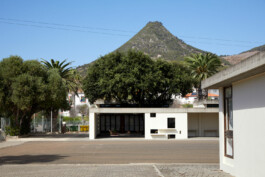
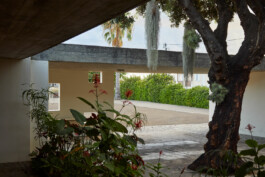
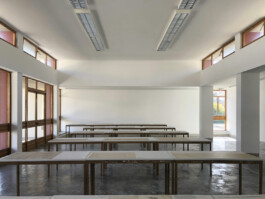
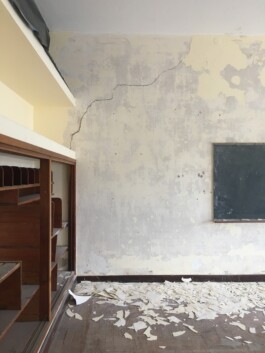
For several decades and until 2018, the Old Primary School of Porto Santo, was the only school in this small Island and today makes an integral part of the memory and identity of all generations of inhabitants. It is exemplar in the relationship between the architectural and teaching space, as a place where the encounter with learning is activated. Following the abandonment of the school community from the building, Porto Santo Municipality established a protocol with Porta33 Cultural Association, with the aim of transforming the Old School space into a place of residences and artistic activities, in proximity to the local community.
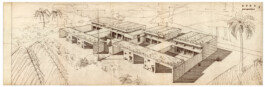
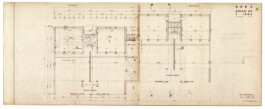
The School was designed in the late 1950s by the architect Raúl Chorão Ramalho, and is a remarkable example of modernity and typological innovation in Portuguese architecture.
The project’s kick-start was facilitated by the first seminar Redesenhar a Antiga Escola da Vila do Porto Santo — encontros com o território e a sua comunidade através da Arte [Redesigning the Old School of Porto Santo Village — meetings with the territory and its community through Art], in November 2019, where the first bonds with the community were established and the work axes were outlined.
There were three axes that were fundamental and orienting for the development of the project in Porto Santo School: the Architecture Axis, the Thought Axis and the Visual Arts Axis. In March 2020, the second part of the Seminar took place, time when I integrated the team in the
implementation of the Architecture Axis, the programme and the project on site.


My integration in the team was defined in two work fronts:
— on one hand the conducting the landscape, territory and architectural survey, the architectural heritage protection procedure of the school building through the Classification of Built Heritage, and the building intervention to be performed;
— on the other hand a close collaboration with Porta33 in the structuring of the artistic and social programming of the project, development of local partnerships and submission of the application to the European Fund EEAGrants, Connecting Dots – Artistic Mobility and Audience Development, submitted in October 2020.
From January 2021, a new bond was established, including the collaboration of Diogo Amaro in the Porto Santo School operation, for co-monitoring the adaptation and maintenance of the construction works carried out in the building, which had the support of the Regional Government of Madeira, as well as for the coconception of the inaugural exhibition


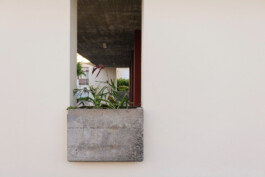
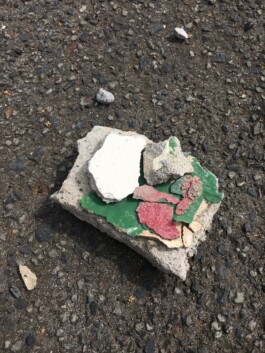
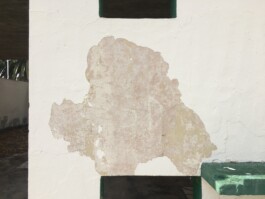
The architetural intervention was based on the research carried out, with the aim was to restore the original design wherever possible, namely by identifying and restoring the original colours and removing additions, in an attempt to restore the building’s original clarity.
The limited budget required a rigorous prioritisation exercise, assuming an intervention that was sometimes anonymous and invisible, but conscious and necessary. All the work was carried out with a view to enabling and facilitating the full restoration of the original project.
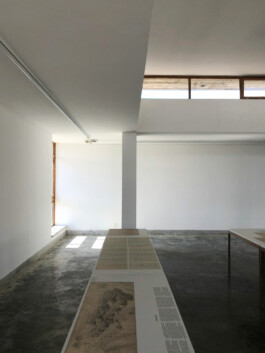
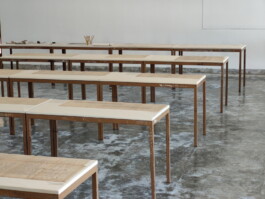
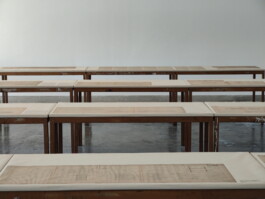
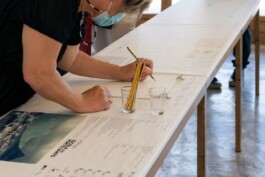
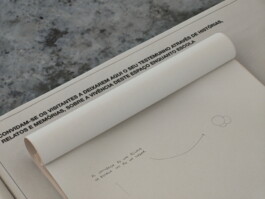
The inaugural exhibition Escola da Vila – Construção de um lugar comum [Construction of a common place], had Raúl Chorão Ramalho’s project as the subject of analysis and reflection, exhibiting his original drawings and writings, as it is believed that this laboratory building or case study should continue to be a source of inspiration and research for new forms of architectural and artistic production.


Construction
Client: Câmara Municipal do Porto Santo e Porta33
Architecture: Madalena Vidigal (responsible) e Diogo Amaro
Site coordination: Eng. António Salvador
Carpentry: Hilário Dias
Eectricity: Nuno Robinson
Paintwork: liderada por Paulo Garrafa
Contractor: Construções Melim & Melim
Logistics: Jorge Baptista
Support: Região Autónoma da Madeira Governo Regional | Vice-Presidência no Porto Santo; Município do Porto Santo; Alfilux; e Tintas CIN
Exhibition
Organization, production and coordination: Porta33
Curation: Madalena Vidigal e Diogo Amaro
Graphic Design: Dayana Lucas
Inventory: Madalena Vidigal
Texts: Madalena Vidigal, with a special contribution from Victor Mestre and Pedro Ravara, and based on the testimonies of Porto Santo's community
Support: Républica Portuguesa, Cultura; DGArtes; Direção-Geral do Património Cultural; SIPA - Forte de Sacavém; Secretaria Regional de Turismo e Cultura; Secretaria Regional de Educação, Ciência e Tecnologia; Vice-Presidência do Porto Santo; Câmara Municipal do Funchal; Câmara Municipal do Porto Santo; Sociedade de Desenvolvimento do Porto Santo, SA; Centro Cultural e de Congressos do Porto Santo; Tintas CIN; Mil Folhas Art & Design; Plano Nacional das Artes.
Production support: Região Autónoma da Madeira Governo Regional | Vice-Presidência no Porto Santo; Município do Porto Santo; Tintas CIN; Alfilux; Construções Melim & Melim
Acknowledgements from the curators: Ana Goes Ferreira
Imprensa
Umbigo — Uma visita à “Escola do Porto Santo: uma obra de Raúl Chorão Ramalho”
Umbigo — Escola da Vila – Construção de um espaço comum
Público — Na ilha de Porto Santo, uma antiga escola é agora um laboratório de artes e pensamento
Studies
Curation
Educational
Cultural
Communal
Conservation and valorisation of the Porto Santo School
with Porta33 and Diogo Amaro
November 2019 - June 2021


© Duarte Belo
© Duarte Belo
© Carolina Vieira / Porta 33
© Madalena Vidigal
© Madalena Vidigal
For several decades and until 2018, the Old Primary School of Porto Santo, was the only school in this small Island and today makes an integral part of the memory and identity of all generations of inhabitants. It is exemplar in the relationship between the architectural and teaching space, as a place where the encounter with learning is activated. Following the abandonment of the school community from the building, Porto Santo Municipality established a protocol with Porta33 Cultural Association, with the aim of transforming the Old School space into a place of residences and artistic activities, in proximity to the local community.
The School was designed in the late 1950s by the architect Raúl Chorão Ramalho, and is a remarkable example of modernity and typological innovation in Portuguese architecture.


My integration in the team was defined in two work fronts:
— on one hand the conducting the landscape, territory and architectural survey, the architectural heritage protection procedure of the school building through the Classification of Built Heritage, and the building intervention to be performed;
— on the other hand a close collaboration with Porta33 in the structuring of the artistic and social programming of the project, development of local partnerships and submission of the application to the European Fund EEAGrants, Connecting Dots – Artistic Mobility and Audience Development, submitted in October 2020.
From January 2021, a new bond was established, including the collaboration of Diogo Amaro in the Porto Santo School operation, for co-monitoring the adaptation and maintenance of the construction works carried out in the building, which had the support of the Regional Government of Madeira, as well as for the coconception of the inaugural exhibition


The architetural intervention was based on the research carried out, with the aim was to restore the original design wherever possible, namely by identifying and restoring the original colours and removing additions, in an attempt to restore the building’s original clarity.
The limited budget required a rigorous prioritisation exercise, assuming an intervention that was sometimes anonymous and invisible, but conscious and necessary. All the work was carried out with a view to enabling and facilitating the full restoration of the original project.
The inaugural exhibition Escola da Vila – Construção de um lugar comum [Construction of a common place], had Raúl Chorão Ramalho’s project as the subject of analysis and reflection, exhibiting his original drawings and writings, as it is believed that this laboratory building or case study should continue to be a source of inspiration and research for new forms of architectural and artistic production.


Construction
Client: Câmara Municipal do Porto Santo e Porta33
Architecture: Madalena Vidigal (responsible) e Diogo Amaro
Site coordination: Eng. António Salvador
Carpentry: Hilário Dias
Eectricity: Nuno Robinson
Paintwork: liderada por Paulo Garrafa
Contractor: Construções Melim & Melim
Logistics: Jorge Baptista
Support: Região Autónoma da Madeira Governo Regional | Vice-Presidência no Porto Santo; Município do Porto Santo; Alfilux; e Tintas CIN
Exhibition
Organization, production and coordination: Porta33
Curation: Madalena Vidigal e Diogo Amaro
Graphic Design: Dayana Lucas
Inventory: Madalena Vidigal
Texts: Madalena Vidigal, with a special contribution from Victor Mestre and Pedro Ravara, and based on the testimonies of Porto Santo's community
Support: Républica Portuguesa, Cultura; DGArtes; Direção-Geral do Património Cultural; SIPA - Forte de Sacavém; Secretaria Regional de Turismo e Cultura; Secretaria Regional de Educação, Ciência e Tecnologia; Vice-Presidência do Porto Santo; Câmara Municipal do Funchal; Câmara Municipal do Porto Santo; Sociedade de Desenvolvimento do Porto Santo, SA; Centro Cultural e de Congressos do Porto Santo; Tintas CIN; Mil Folhas Art & Design; Plano Nacional das Artes.
Production support: Região Autónoma da Madeira Governo Regional | Vice-Presidência no Porto Santo; Município do Porto Santo; Tintas CIN; Alfilux; Construções Melim & Melim
Acknowledgements from the curators: Ana Goes Ferreira
Imprensa
Umbigo — Uma visita à “Escola do Porto Santo: uma obra de Raúl Chorão Ramalho”
Umbigo — Escola da Vila – Construção de um espaço comum
Público — Na ilha de Porto Santo, uma antiga escola é agora um laboratório de artes e pensamento
Madalena Vidigal (1992)
Portuguese native, advanced english (B2), intermidiate italian (B1), elementary spanish and french
Education
2010 - 2016 Master of Architecture, University of Porto (FAUP), PT
2014 - 2015 Exchange program, Accademia di Architettura de Mendrisio, CH
2020 - 2021 Post-graduation in Social and Sustainable Architecture, Porto Artistic School (ESAP) | Critical Concrete, PT
Advanced training
2024 Repartion Architecture with Paulo Tavares, online, BR
2023 Earth Construction in Morroco, with BBB and BC Architects, ecological and bioclimatic building knowledge, Ouled Merzoug MA
2022 Da linha ao círculo, Portuguese Architects Registration Board, online, PT
2022 Design & Build 2022 - Plant based woven architecture, Évora PT
2021 Construction Labs, with Coletivo Mel, Pietro del Esposti, Hanno Burtscher (earthman), Critical Concrete, Porto PT
Awards and grants
2025 Culture Moves Europe, Mobility Grant
2022 Michelangelo Foundation, Educational Grant for Young Designers
2021 Madeira and Porto Santo Architecture Prize, Honorable Mention
2017 Calouste Gulbenkian Foundation, Grant to Support Artistic Creation
Exhibitions
2023 “Porto Santo School: A work by Raúl Chorão Ramalho” co-curation (itinerancy), Garagem Sul, Lisbon PT
2021 “Porto Santo School: Construction of a Common Place” co-curation, Porta 33, Madeira PT
2021 “Atlas Suzane Daveau” co-curation, Nacional Library of Portugal, Lisbon PT
2018 “Rui Goes Ferreira. Image of an interrupted work”, curation, Porta 33, Funchal PT
Selected publications
2024 Graphic-design, artist's book “Ana Vidigal”, Lisboa, Documenta
2023 Author, Cadernos de Viagem n. 10, edited by André Tavares, Lisboa, Centro Cultural de Belém
2021 Co-editor, diptych “Atlas Suzanne Daveau” e “O Ambiente Geográfico Natural.”
2019 Editor assistant “Arquivo: Diogo Seixas Lopes”, Porto, Dafne Editor
2018 Article “A cultura de uma paisagem insular," TRANSLOCAL. Culturas Contemporâneas Locais e Urbanas, n. 1
Selected lectures, talks and academic engagement
2025 “Beyond Matter”, Radio Robida, IZBA, Topòlo, IT
2024 “Realizar a Utopia”, Lusíada University, Lisbon PT
2023 “Atlas Suzanne Daveau”, Livraria do Batalha, Porto PT
2021 Moderation, Escola do Porto Santo, with Ana Tostões, Paulo David, et al.
2019 Annual Architecture Month Conference, “Habitação Colectiva: Cidade para todos”, OASRS, Funchal PT
2015 - 2017 Teaching assistant Porto Academy Summer School (Bast FR, Jun Igarashi JP, Sami PT)
Selected collaborations
2017 - 2025 Collaborations from which the selected projects:
2021 - 2023 URBiNAT: Campanhã Healthy Corridor, as member of AGRUPA International Network, Porto PT
2018 - 2019 Gardens of Stone, as architect at BARBAS LOPES, Lisbon PT
2017 - 2018 Arquivo: Diogo Seixas Lopes, as editor assistant and inventory at DAFNE, Porto/Lisbon PT
Madalena Vidigal (1992)
Portuguese native, advanced english (B2), intermidiate italian (B1), elementary spanish and french
Education
2010 - 2016 Master of Architecture, University of Porto (FAUP), PT
2014 - 2015 Exchange program, Accademia di Architettura de Mendrisio, CH
2020 - 2021 Post-graduation in Social and Sustainable Architecture, Porto Artistic School (ESAP) | Critical Concrete, PT
Advanced training
2024 Repartion Architecture with Paulo Tavares, online, BR
2023 Earth Construction in Morroco, with BBB and BC Architects, ecological and bioclimatic building knowledge, Ouled Merzoug MA
2022 Da linha ao círculo, Portuguese Architects Registration Board, online, PT
2022 Design & Build 2022 - Plant based woven architecture, Évora PT
2021 Construction Labs, with Coletivo Mel, Pietro del Esposti, Hanno Burtscher (earthman), Critical Concrete, Porto PT
Awards and grants
2025 Culture Moves Europe, Mobility Grant
2022 Michelangelo Foundation, Educational Grant for Young Designers
2021 Madeira and Porto Santo Architecture Prize, Honorable Mention
2017 Calouste Gulbenkian Foundation, Grant to Support Artistic Creation
Exhibitions
2023 “Porto Santo School: A work by Raúl Chorão Ramalho” co-curation (itinerancy), Garagem Sul, Lisbon PT
2021 “Porto Santo School: Construction of a Common Place” co-curation, Porta 33, Madeira PT
2021 “Atlas Suzane Daveau” co-curation, Nacional Library of Portugal, Lisbon PT
2018 “Rui Goes Ferreira. Image of an interrupted work”, curation, Porta 33, Funchal PT
Selected publications
2024 Graphic-design, artist's book “Ana Vidigal”, Lisboa, Documenta
2023 Author, Cadernos de Viagem n. 10, edited by André Tavares, Lisboa, Centro Cultural de Belém
2021 Co-editor, diptych “Atlas Suzanne Daveau” e “O Ambiente Geográfico Natural.”
2019 Editor assistant “Arquivo: Diogo Seixas Lopes”, Porto, Dafne Editor
2018 Article “A cultura de uma paisagem insular," TRANSLOCAL. Culturas Contemporâneas Locais e Urbanas, n. 1
Selected lectures, talks and academic engagement
2025 “Beyond Matter”, Radio Robida, IZBA, Topòlo, IT
2024 “Realizar a Utopia”, Lusíada University, Lisbon PT
2023 “Atlas Suzanne Daveau”, Livraria do Batalha, Porto PT
2021 Moderation, Escola do Porto Santo, with Ana Tostões, Paulo David, et al.
2019 Annual Architecture Month Conference, “Habitação Colectiva: Cidade para todos”, OASRS, Funchal PT
2015 - 2017 Teaching assistant Porto Academy Summer School (Bast FR, Jun Igarashi JP, Sami PT)
Selected collaborations
2017 - 2025 Collaborations from which the selected projects:
2021 - 2023 URBiNAT: Campanhã Healthy Corridor, as member of AGRUPA International Network, Porto PT
2018 - 2019 Gardens of Stone, as architect at BARBAS LOPES, Lisbon PT
2017 - 2018 Arquivo: Diogo Seixas Lopes, as editor assistant and inventory at DAFNE, Porto/Lisbon PT
Currently based between Porto, Lisbon and Funchal, I am working in self-iniciative projects and curating an exhibiton commissioned by CCB | Centro de Arquitectura, oppening may 2026.
As an independent architect and reseacher, I have worked and collaborated with several institutions, associations, and communities. Key projects include the revitalization of Escola da Vila do Porto Santo, awarded an Honorable Mention at the Madeira Architecture Prize (2022), and the curatorial research on the legacy of Raul Chorão Ramalho, Rui Goes Ferreira and Suzanne Daveau. Published in magazines such as Punkto, Umbigo and Koozarch.
Trained at the Faculty of Architecture of Porto (FAUP) with an exchange at the Accademia di Architettura di Mendrisio, I have collaborated with several architectural studios, while deepening my engagement of ecological building techniques through hands-on experiences in Portugal and Morocco.
Previously I have contributed to studios such as Barbas Lopes, Baixa Atelier, and hori-zonte, and integrated A-GRUPA Collaborative Urbanism Network in participatory urbanism initiatives.
I believe that architecture should act as an aggregating discipline, capable of uniting multivocal knowledge and fostering a harmonious and continuous relationship with the natural world.
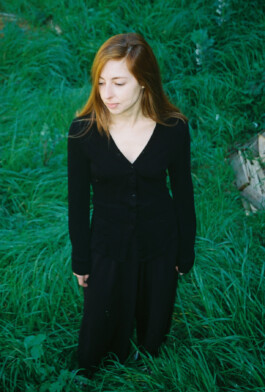
© Inês Cardoso Ribeiro
Currently based between Porto, Lisbon and Funchal, I am working in self-iniciative projects and curating an exhibiton commissioned by CCB | Centro de Arquitectura, oppening may 2026.
As an independent architect and reseacher, I have worked and collaborated with several institutions, associations, and communities. Key projects include the revitalization of Escola da Vila do Porto Santo, awarded an Honorable Mention at the Madeira Architecture Prize (2022), and the curatorial research on the legacy of Raul Chorão Ramalho, Rui Goes Ferreira and Suzanne Daveau. Published in magazines such as Punkto, Umbigo and Koozarch.
Trained at the Faculty of Architecture of Porto (FAUP) with an exchange at the Accademia di Architettura di Mendrisio, I have collaborated with several architectural studios, while deepening my engagement of ecological building techniques through hands-on experiences in Portugal and Morocco.
Previously I have contributed to studios such as Barbas Lopes, Baixa Atelier, and hori-zonte, and integrated A-GRUPA Collaborative Urbanism Network in participatory urbanism initiatives.
I believe that architecture should act as an aggregating discipline, capable of uniting multivocal knowledge and fostering a harmonious and continuous relationship with the natural world.

© Inês Cardoso Ribeiro